


October 22, 2026
How Can You Tell If Your Child Is Ready for Kindergarten?
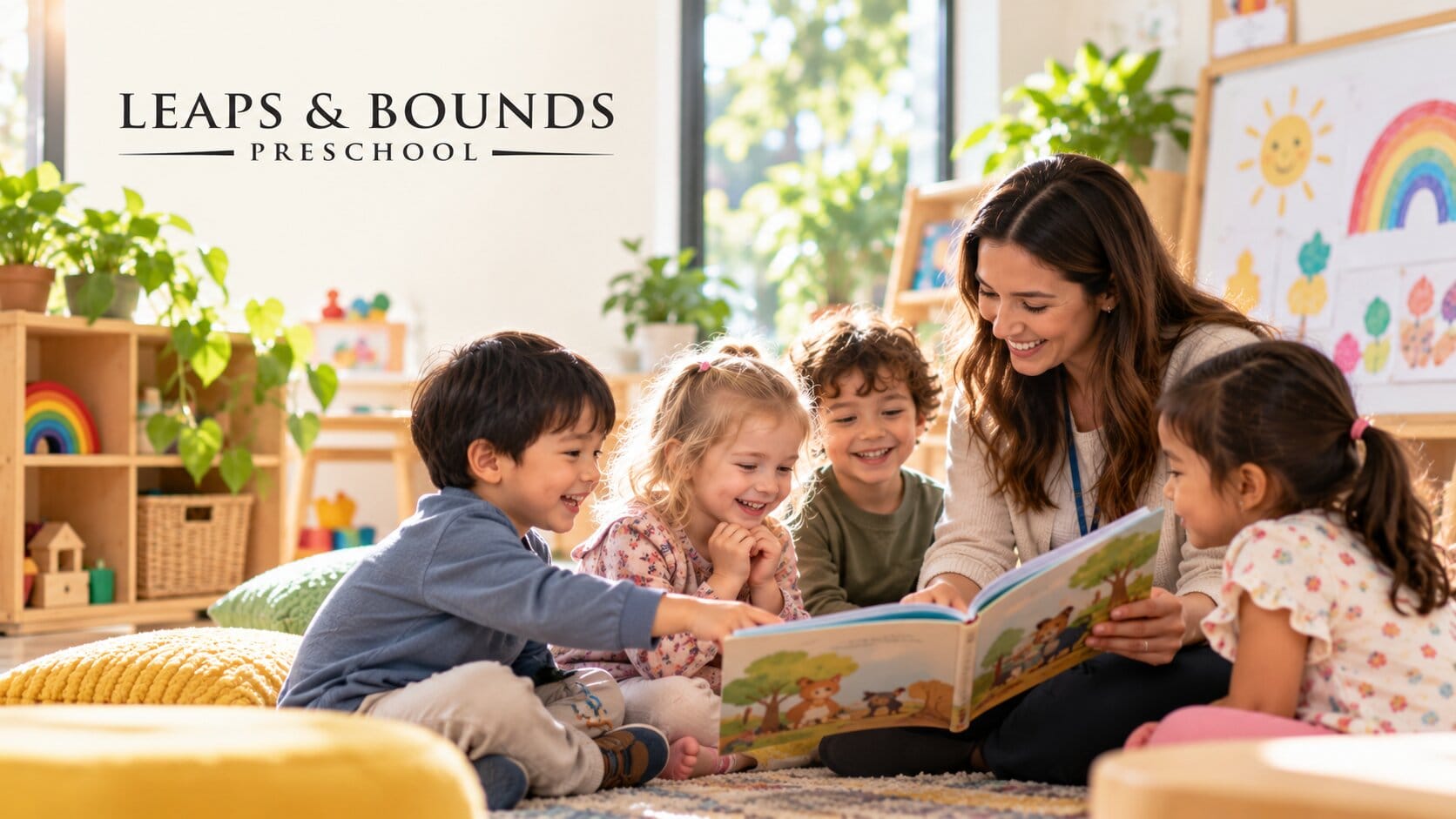
Kindergarten readiness is about more than knowing letters, numbers, or how to write their name. It involves developing the social, emotional, communication, and practical skills that help children participate in group activities, manage everyday routines, and feel confident in a new environment.
If you’re wondering whether your child is ready, look at how they communicate, explore, interact with others and approach everyday tasks. At Leaps & Bounds Preschool, a family-owned, independent provider, play-based learning encourages children’s independence, curiosity, and whole-child development, helping build foundations for the next stage of learning.
What Should a Child Be Able to Do Before Kindergarten?
Children do not need to master every skill before kindergarten. Kindergarten readiness means developing the foundations that help them participate in learning, build relationships, and manage age-appropriate routines with support.
Useful foundations include:
- Communication: Expressing basic needs, listening to others, and responding to simple instructions.
- Social skills: Playing alongside other children, sharing resources and beginning to take turns.
- Independence: Attempting tasks such as packing belongings, washing hands and managing personal items.
- Emotional development: Beginning to recognise feelings and accepting support when upset.
- Learning behaviours: Exploring, asking questions, concentrating briefly and trying again when something is difficult.
Every child develops at a different pace. These skills are useful foundations, not a pass-or-fail test for school entry.
What Are the Signs Your Child Is Ready for Kindergarten?
The signs of kindergarten readiness often appear during everyday play and family routines. A child may show curiosity about new activities, communicate when they need help, participate in group experiences, or become more comfortable separating from a parent.
Look for progress across different areas rather than expecting consistent performance every day.
| Readiness area | What parents might notice |
| Social development | Shows interest in other children and shared play |
| Communication | Expresses needs and understands familiar instructions |
| Independence | Attempts familiar tasks with less assistance |
| Emotional skills | Begins recovering from disappointment with support |
| Curiosity | Explores materials, asks questions and tries new activities |
A child who is shy, energetic, or still learning to manage emotions can also be developing readiness skills. Confidence often grows through positive relationships and repeated opportunities to practise.
Which Kindergarten Readiness Skills Can Parents Encourage at Home?
Parents can build kindergarten readiness skills through ordinary activities rather than formal lessons. Everyday experiences provide opportunities to practise communication, coordination, independence and problem-solving without making learning feel like a test.
Try these activities at home:
- Read together: Discuss pictures, characters and what might happen next.
- Play counting games: Count toys, sort objects and identify simple patterns.
- Encourage self-help: Let your child practise dressing, tidying up and washing hands.
- Play with others: Use board games, pretend play and building activities to practise turn-taking.
- Talk about feelings: Help your child name emotions and explore appropriate ways to communicate them.
- Follow simple routines: Encourage your child to complete familiar tasks in sequence.
These experiences support preparing a child for kindergarten by strengthening practical skills and confidence at a comfortable pace.
How Can You Prepare Your Child for Kindergarten?
Preparing a child for kindergarten means helping them become familiar with routines, relationships, and expectations while keeping the experience positive.
Parents can make the change easier by:
- Talking about school: Explain what a typical day might involve using simple, realistic examples.
- Practising routines: Establish consistent sleep, meal and morning habits.
- Boosting social interaction: Creating opportunities to play with other children in different settings.
- Building independence gradually: Let your child attempt manageable tasks before offering assistance.
- Exploring the environment: Where possible, attend orientation sessions or visit the school before the first day.
In Australia, kindergarten and school-entry ages vary between states and territories. Check the relevant education department’s enrolment requirements rather than relying on a single age or readiness milestone.
What If Your Child Isn’t Ready in Every Area?
It is normal for children to develop various skills at different rates. A child may communicate confidently but need help with separation, or enjoy group activities while still developing independence.
Focus on the area where your child needs support and practise it through short, everyday activities. For example, if getting ready independently is difficult, encourage one manageable task at a time rather than expecting your child to complete an entire morning routine alone.
Avoid comparing your child with siblings or classmates. If you have ongoing concerns about their development, speak with their educators or an appropriate early childhood professional for individual guidance.
How Can Preschool Support the Transition to Kindergarten?
Preschool can help children develop the social, emotional, physical and cognitive foundations that support their transition to kindergarten. Play-based experiences encourage children to communicate, cooperate, explore ideas and practise independence in a supportive learning environment.
Leaps & Bounds Preschool is a family-owned provider with centres in Manly, Highgate, Serpentine, Bunbury and Capel. Its philosophy emphasises learning through play, children’s individual interests, practical skills and secure relationships.
Families can explore our Highgate centre, which provides both preschool and childcare for children aged six weeks to five years, with extended hours from 7.00 am to 5.30 pm. The centre’s programme includes opportunities to play, create, investigate and explore.
Parents can also learn about our Manly centre, which caters for children aged two to six years and is open from 7.30 am to 6.00 pm.
At Leaps & Bounds Preschool, educators aim to nurture children’s interests and support development through meaningful experiences. Families can contact their preferred centre to discuss the programme, enrolment and how the environment may suit their child’s needs.
Kindergarten readiness is not about achieving perfection before school begins. It is about helping children build confidence, relationships, independence and a willingness to learn. With encouragement at home and supportive early learning experiences at preschool, children can develop foundations that help them approach their next educational stage with greater confidence.
FAQs
At what age should parents start thinking about kindergarten readiness?
Parents can encourage independence, communication, and social interaction well before school starts. Everyday play and routines help develop these foundations naturally.
Does my child need to know how to read before starting kindergarten?
No. Independent reading is not a prerequisite. Stories, conversations, rhyming, and early writing activities help build useful foundations.
How can I tell whether my child can cope with a kindergarten routine
Notice how your child responds to transitions, simple instructions, group activities, and tidying up. Familiar routines can help develop confidence.
Should I be concerned if my child is shy before starting kindergarten?
Not necessarily. Some children need more time to feel comfortable in new environments. Encourage gradual social interaction and practising how to ask for help.
What should I do if my child struggles with one kindergarten readiness skill?
Practise the skill through short, age-appropriate activities. If concerns persist, discuss them with an early childhood professional.
How can Leaps & Bounds Preschool help prepare my child for kindergarten?
Leaps & Bounds Preschool encourages learning through play, independence, social interaction and individual development. Contact your preferred centre to discuss its programme and your child’s needs.